
Table of Contents
Introduction: Smoked Trout
Welcome to the ultimate guide on how to create the perfect smoked trout. This delightful dish is a celebration of flavors, combining the rich, natural taste of fresh trout with the aromatic depth of hardwood smoke. Whether you’re a seasoned grill master or a beginner looking to expand your BBQ repertoire, smoked trout is a versatile and delicious addition to any seafood menu.
The Art of Smoking Fish
Smoking fish is an age-old technique that enhances the flavor and preserves the fish. It involves curing the fish with a marinade or dry rub before exposing it to smoke from burning wood chips. This process not only imparts a unique smoky flavor but also transforms the texture, making the fish a tender and flavorful treat.
Why Choose Trout?
Trout is an excellent choice for smoking due to its firm texture and mild flavor, which absorbs the smoky aroma beautifully. It’s a versatile fish that pairs well with a variety of marinades and can be served in numerous ways, making it a favorite among smoked fish enthusiasts.

Love easy seafood recipes like this? 🐟
Get new fish and seafood recipes, simple cooking tips and family meal ideas in your inbox every week. Free, no spam, unsubscribe anytime. See our Privacy Policy.
Ingredients
Essential Ingredients for Smoked Trout
To make the perfect smoked trout, you’ll need fresh trout fillets, a simple marinade of olive oil, lemon juice, garlic, and herbs, and a selection of wood chips for smoking, such as hickory or applewood.
Optional Additions for Extra Flavor
Enhance the flavor of your smoked trout with optional ingredients like brown sugar for sweetness, or a dash of soy sauce for umami depth. Fresh dill or parsley can also be added to the marinade for a burst of herbal freshness.
Pro Tips
Smoking trout requires a careful balance of temperature and timing. Here are some pro tips to help you achieve the best results:
- Choose the right wood for smoking: Fruitwoods like apple or cherry impart a sweet, mild flavor that’s perfect for trout.
- Maintain a consistent temperature: Aim for a smoker temperature of 180°F to 200°F to ensure the trout cooks evenly without drying out.
- Patience is key: Allow the fish to smoke slowly to absorb maximum flavor.
- Use a digital thermometer to monitor internal temperature: The trout is done when it reaches an internal temperature of 145°F.
For more detailed instructions and tips, check out our guide on Smoked Venison Roast A Beginners Guide.
Step-by-Step Instructions
Preparing the Trout
Start by rinsing the trout fillets under cold water and patting them dry with paper towels. Prepare the marinade by mixing olive oil, lemon juice, minced garlic, salt, and pepper in a bowl. Coat the fillets with the marinade and let them rest in the fridge for at least one hour.
Smoking Process
Preheat your smoker to 180°F. Place the trout fillets skin-side down on the smoker grates. Add your chosen wood chips to the smoker, and close the lid. Smoke the trout for 45 to 60 minutes, checking occasionally to ensure the temperature remains steady.
Finishing Touches
Once the trout reaches an internal temperature of 145°F, remove it from the smoker. Let it rest for a few minutes before serving. Garnish with fresh herbs and a squeeze of lemon juice for added brightness.
Love easy seafood recipes like this? 🐟
Get new fish and seafood recipes, simple cooking tips and family meal ideas in your inbox every week. Free, no spam, unsubscribe anytime. See our Privacy Policy.
Serving Suggestions
Pairing with Sides
Smoked trout pairs beautifully with a variety of sides. Consider serving it with a fresh green salad, crusty bread, or Smoked Corn On The Cob for a complete meal.
Best Beverages to Serve
A crisp white wine or a light beer complements the smoky flavors of the trout perfectly. For a non-alcoholic option, try a sparkling lemon or lime drink.
Nutritional Information
Caloric Content and Macronutrients
Smoked trout is a nutritious choice, providing a good source of protein and healthy omega-3 fatty acids. A 3-ounce serving contains approximately 140 calories, with 20 grams of protein, 7 grams of fat, and 0 grams of carbohydrates.
Health Benefits of Smoked Trout
In addition to being delicious, smoked trout is beneficial for heart health due to its high omega-3 content. It also supports brain health and provides essential vitamins and minerals like vitamin D and selenium.


Perfect Smoked Trout

Equipment
- 1 smoker
- 1 mixing bowl medium
- 1 digital thermometer
Ingredients
Marinade
- 1/4 cup olive oil
- 2 tbsp lemon juice
- 2 cloves garlic minced
- 1 tsp salt
- 1/2 tsp black pepper
Trout
- 4 trout fillets
- 1/4 cup fresh dill chopped
Instructions
Preparation
- In a medium mixing bowl, whisk together olive oil, lemon juice, garlic, salt, and pepper until well combined.
- Place the trout fillets in a large dish and pour the marinade over them. Cover and refrigerate for at least 1 hour.
Serving
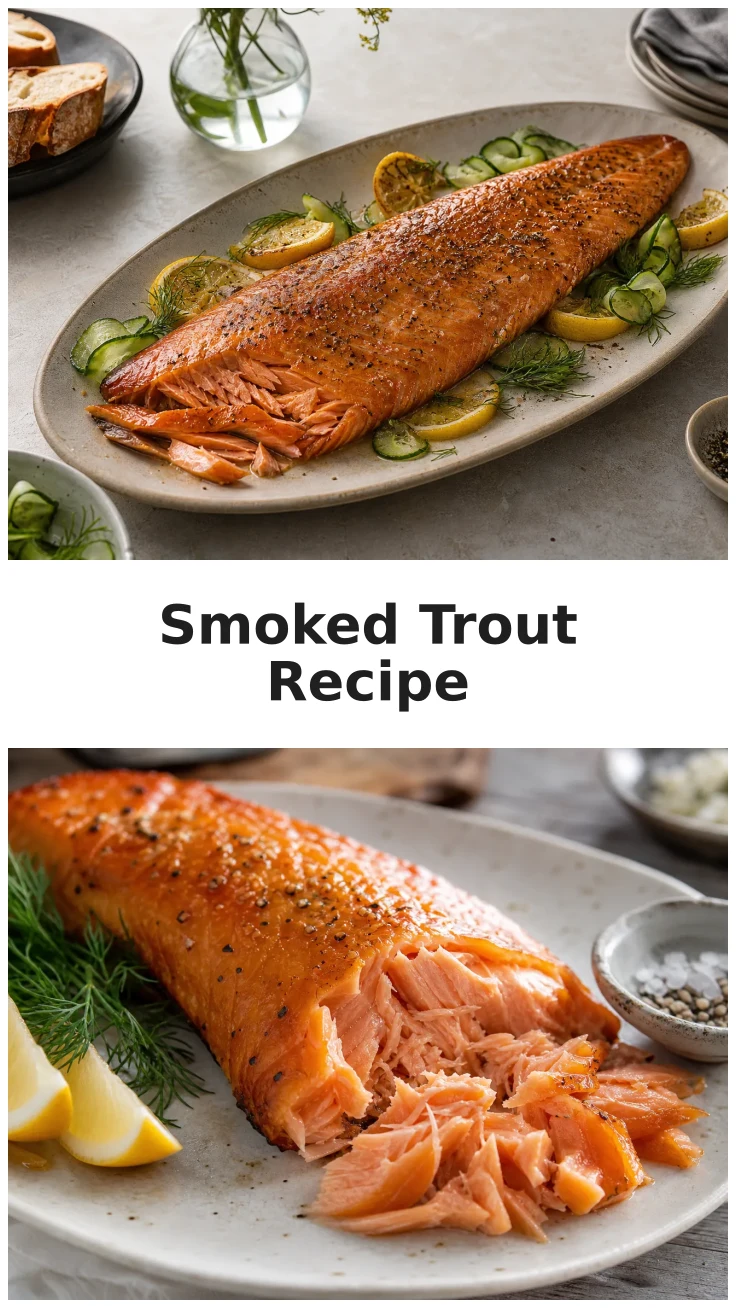
- After smoking, allow the trout to rest briefly. Serve with fresh dill and a wedge of lemon.
Storage
- Wrap leftover trout in aluminum foil or place in an airtight container. Store in the refrigerator for up to 3 days.
Notes
Ingredient Substitutions: Use lime juice instead of lemon for a tangy twist.
How to Serve: Pair with a crisp salad or crusty bread.
Storage & Freshness: Store smoked trout in the fridge for up to 3 days.
Make-Ahead Tips: Marinate the trout overnight for deeper flavor.
FAQ
Can I use frozen trout for smoking?
Yes, you can use frozen trout for smoking, but it is important to thaw it properly beforehand. Slowly defrost the trout in the refrigerator overnight to maintain its texture and flavor. Once thawed, pat the fillets dry with paper towels to remove excess moisture before marinating and smoking.
What wood chips are best for smoking trout?
The best wood chips for smoking trout are fruitwoods like apple and cherry. These woods provide a mild, sweet smoke flavor that complements the delicate taste of trout. Hickory and oak can also be used, but they impart a stronger flavor that may overpower the fish.
How can I tell when my smoked trout is done?
Your smoked trout is done when it reaches an internal temperature of 145°F. Use a digital thermometer to check the temperature at the thickest part of the fillet. The flesh should be opaque and flake easily with a fork. Smoking times may vary depending on the size of the fillets and the consistency of your smoker’s temperature.
Enjoyed this recipe? Leave a review!
There are no reviews yet. Be the first one to write one.